 Call
Call 


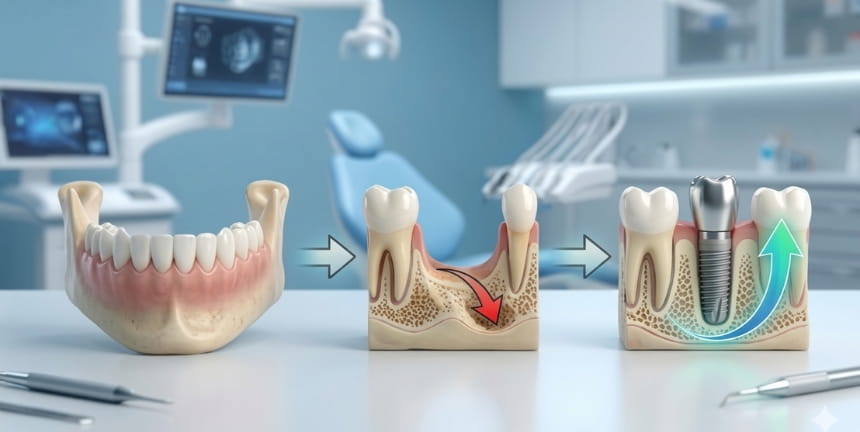
How Dental Implants Help Prevent Jawbone Loss After Tooth Loss
Losing a tooth can affect more than just your smile. While many people focus on the visible gap left behind, there is another important concern that often goes unnoticed jawbone loss. When a tooth is missing, the bone that once supported it begins to shrink over time. This process can gradually change the shape of your face, weaken nearby teeth, and impact overall oral health.
Fortunately, modern restorative dentistry offers an effective solution. Dental implants not only replace missing teeth but also help preserve the health and strength of the jawbone. Unlike traditional tooth replacement options, implants work in a way that closely mimics natural teeth, helping maintain the bone structure that supports your smile.
Understanding how dental implants protect the jawbone can help patients make informed decisions about tooth replacement and long-term oral health.
Understanding Jawbone Loss After Tooth Loss
The jawbone plays a crucial role in supporting teeth and maintaining facial structure. When a tooth is lost due to injury, decay, or gum disease, the bone that previously held the tooth root begins to lose stimulation.
Why Bone Loss Happens
Natural tooth roots stimulate the jawbone whenever you chew or bite. This stimulation signals the body to maintain healthy bone tissue. However, when a tooth is missing, that stimulation disappears.
Without regular stimulation:
- The bone in that area begins to shrink
- Bone density gradually decreases
- The surrounding teeth may shift
- The facial structure may change over time
In fact, studies show that significant bone loss can begin within the first year after tooth loss if the tooth is not replaced.
How Jawbone Loss Affects Oral Health
Jawbone loss can lead to more than cosmetic concerns. Over time, it can create several oral health complications.
Changes in Facial Appearance
As the jawbone shrinks, the lower portion of the face may appear sunken or collapsed. This can make individuals look older than they actually are.
Shifting of Surrounding Teeth
When there is a gap in the smile, neighboring teeth may gradually move into the empty space. This shifting can affect bite alignment and make it harder to maintain proper oral hygiene.
Difficulty Chewing
Missing teeth and bone loss can reduce chewing efficiency, making it more difficult to eat certain foods comfortably.
Increased Risk of Additional Tooth Loss
When the jawbone weakens, the remaining teeth may lose some of their support. Over time, this can increase the likelihood of further tooth loss.
For these reasons, dentists often recommend replacing missing teeth as soon as possible.
What Are Dental Implants?
Dental implants are one of the most advanced solutions in modern restorative dentistry for replacing missing teeth.
A dental implant consists of three main parts:
- Implant Post – A small titanium post placed in the jawbone that acts as an artificial tooth root
- Abutment – A connector that holds the replacement tooth in place
- Dental Crown – A custom-made tooth restoration that looks and functions like a natural tooth
The implant post integrates with the jawbone through a process called osseointegration, creating a strong and stable foundation for the replacement tooth.
This unique design is what allows dental implants to support bone health.
How Dental Implants Prevent Jawbone Loss
Unlike traditional dentures or bridges, dental implants replace both the visible tooth and the root structure beneath the gums.
This provides several important benefits for jawbone health.
Restoring Natural Bone Stimulation
The implant post functions like a natural tooth root. When you chew or bite, the implant transfers pressure to the jawbone, stimulating the bone tissue.
This stimulation signals the body to continue maintaining the bone in that area, preventing deterioration.
Preserving Bone Density
Because implants stimulate the jawbone, they help preserve bone density over time. This reduces the likelihood of bone shrinkage that often occurs after tooth loss.
Maintaining bone density is important for supporting nearby teeth and maintaining facial structure.
Preventing Bone Resorption
Bone resorption is the process in which the body gradually breaks down bone tissue when it is no longer needed. Dental implants help prevent this process by keeping the bone actively engaged during daily functions like chewing.
Dental Implants vs Other Tooth Replacement Options
Many patients wonder how dental implants compare with other tooth replacement solutions when it comes to bone preservation.
Dentures
Traditional dentures rest on top of the gums and do not replace the tooth root. Because they do not stimulate the jawbone, bone loss can continue even while wearing dentures.
Over time, this bone loss may cause dentures to become loose and require adjustments.
Dental Bridges
Dental bridges replace the visible portion of a missing tooth but rely on adjacent teeth for support. While bridges restore appearance and function, they do not prevent bone loss in the area where the tooth root is missing.
Dental Implants
Dental implants are the only tooth replacement option that replaces the entire tooth structure, including the root. This makes them the most effective solution for preserving jawbone health.
Additional Benefits of Dental Implants
In addition to preventing jawbone loss, dental implants offer several other advantages for patients.
Natural Look and Feel
Dental implants are designed to look, feel, and function like natural teeth. Most people cannot tell the difference between an implant and a natural tooth.
Long-Term Durability
With proper care and regular dental visits, implants can last for many years and often decades.
Improved Chewing Ability
Because implants are anchored in the jawbone, they provide strong support when chewing and biting.
Protecting Adjacent Teeth
Unlike bridges, implants do not require neighboring teeth to be altered or used for support.
Who Is a Good Candidate for Dental Implants?
Most adults with missing teeth may be candidates for dental implants. However, certain factors influence whether the procedure is appropriate.
Ideal candidates generally have:
- Healthy gums
- Adequate jawbone density
- Good overall oral health
- A commitment to maintaining oral hygiene
Even patients who have experienced some bone loss may still be eligible for implants with procedures such as bone grafting.
A consultation with a dentist experienced in restorative dentistry can help determine the best treatment option for each individual.
The Importance of Replacing Missing Teeth Early
One of the most effective ways to prevent significant jawbone loss is to replace missing teeth as soon as possible.
Early treatment helps:
- Preserve bone structure
- Maintain facial shape
- Prevent shifting of surrounding teeth
- Improve overall oral function
Delaying treatment may allow bone loss to progress, which can make future procedures more complex.
Frequently Asked Questions (FAQs)
How quickly does jawbone loss occur after tooth loss?
Bone loss can begin within the first few months after a tooth is lost. Significant bone deterioration may occur within the first year if the missing tooth is not replaced.
Are dental implants the only option that prevents bone loss?
Dental implants are currently the only tooth replacement option that replaces the tooth root and stimulates the jawbone, helping prevent bone deterioration.
Are dental implants safe?
Yes. Dental implants have been used successfully for many years and have a high success rate when placed by experienced dental professionals.
How long do dental implants last?
With proper care, dental implants can last for many years or even a lifetime. Maintaining good oral hygiene and regular dental checkups is important for long-term success.
Is the dental implant procedure painful?
Most patients experience minimal discomfort during the procedure because it is performed using local anesthesia. Recovery is typically manageable and improves within a few days.
Protecting Your Smile and Jawbone Health
Replacing missing teeth is about more than restoring appearance it is also about protecting the long-term health of your mouth. Dental implants play a critical role in preserving the jawbone, preventing bone deterioration, and maintaining facial structure after tooth loss.
By restoring the natural stimulation that the jawbone needs to remain strong, implants provide a reliable and long-lasting solution in modern restorative dentistry. Patients considering dental implants in Pearland, TX can benefit from consulting with an experienced dental professional who can evaluate their oral health and recommend the most effective treatment plan for rebuilding a healthy, confident smile.